
Explore research methodologies across disciplines with this curated selection of books designed to support your academic inquiry.
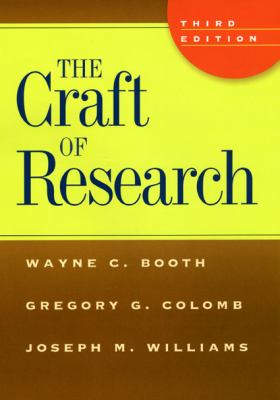
Booth, Wayne C.; Colomb, Gregory G.; Williams, Joseph M., 2008
The Craft of Research explains how to build an argument that motivates readers to accept a claim; how to anticipate the reservations of readers and to respond to them appropriately; and how to create introductions and conclusions that answer that most demanding question, “So what?”
Beginning quantitative research
Williams, Malcolm; Wiggins, Richard D.; Vogt, W. Paul, 2021
This concise text provides a clear and digestible introduction to completing quantitative research. Taking you step-by-step through the process of completing your quantitative research project, it offers guidance on: Formulating your research question; Completing literature reviews and meta-analysis; Formulating a research design and specifying your target population and data source; Choosing an appropriate method and analyzing your findings. Part of The SAGE Quantitative Research Kit, this book will give you the know-how and confidence needed to succeed on your quantitative research journey.
A beginner’s guide to scientific method
Carey, Stephen S., 2012
A comprehensive guide that provides an introduction to the scientific method of inquiry. It helps you not only learn about the proper conduct of science, but also how to recognize and question factors such as pseudoscience, untestable explanations and fallacies.

The Princeton guide to historical research
Schrag, Zachary M., 2021
The Princeton Guide to Historical Research provides students, scholars, and professionals with the skills they need to practice the historian’s craft in the digital age, while never losing sight of the fundamental values and techniques that have defined historical scholarship for centuries. Zachary Schrag begins by explaining how to ask good questions and then guides readers step-by-step through all phases of historical research, from narrowing a topic and locating sources to taking notes, crafting a narrative, and connecting one’s work to existing scholarship.
Principles of methodology : research design in social science
6, Perri; Bellamy, Christine. 2012
Existing literature glosses over the often difficult interrelationship between practical research design and the theoretical underpinnings of methodology. This text addresses these issues head on and helps the reader to better understand each stage of the research process.
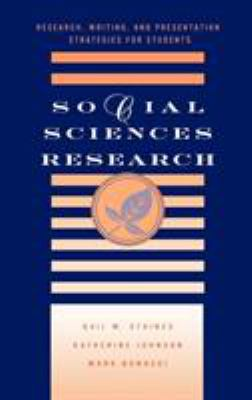
Social sciences research : research, writing, and presentation strategies for students
Staines, Gail M.; Johnson, Katherine; Bonacci, Mark A., 2008
This text offers a clear, systematic introduction to the principles and practices of contemporary social science research. Covering research design, qualitative and quantitative methodologies, data collection, ethical considerations, and analytical strategies, the authors provide a rigorous yet accessible foundation for students and emerging researchers. Emphasizing critical thinking and practical application, the book equips readers to design, conduct, and evaluate empirical studies across diverse social science disciplines.

Research methods in psychology : evaluating a world of information
Morling, Beth, 2026
Award-winning author Beth Morling has thoroughly updated her groundbreaking text with fresh examples, revised ethics and statistics coverage, and a new section on qualitative methods. The new Fifth Edition is available as a Norton Illumine Ebook designed to support students as they practice being research consumers, learn how to produce research, and actively engage with their reading.
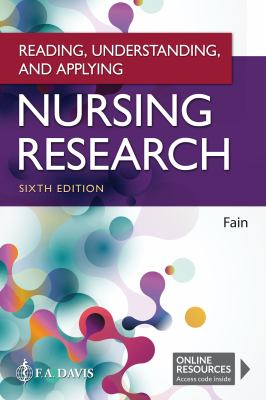
Reading, understanding, and applying nursing research
Fain, James A., 2021
This foundational text guides nursing students and practitioners through the essential skills needed to critically appraise, interpret, and apply research in clinical practice. Fain presents research concepts with clarity, emphasizing evidence‑based decision‑making, ethical considerations, and practical integration of findings into patient care. The book supports learners in becoming informed consumers of research and strengthens the link between scholarly inquiry and professional nursing practice.
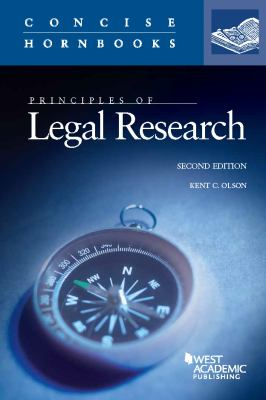
Olson, Kent C., 2015
Winner of the American Association of Law Libraries’ Joseph L. Andrews Legal Literature Award in 2010, Principles of Legal Research provides encyclopedic yet concise coverage of research methods and resources using both free and commercial websites as well as printed publications. It has been thoroughly updated to provide coverage of WestlawNext, Lexis Advance, Bloomberg Law, and other new resources. An introductory survey of research strategies is followed by chapters on the sources of U.S. law created by each branch of government, discussion of major secondary sources, and an overview of international and comparative law.
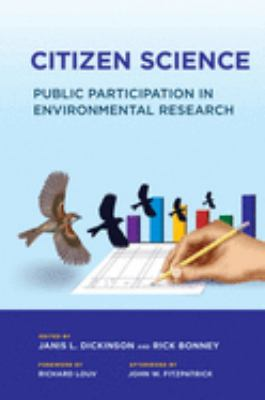
Citizen science : public participation in environmental research
Dickinson, Janis L.; Bonney, Rick, 2012
In Citizen Science, experts from a variety of disciplines share their experiences of creating and implementing successful citizen science projects, primarily those that use massive data sets gathered by citizen scientists to better understand the impact of environmental change. This first and foundational book for this developing field of inquiry addresses basic aspects of how to conduct citizen science projects, including goal-setting, program design, and evaluation, as well as the nuances of creating a robust digital infrastructure and recruiting a large participant base through communications and marketing.
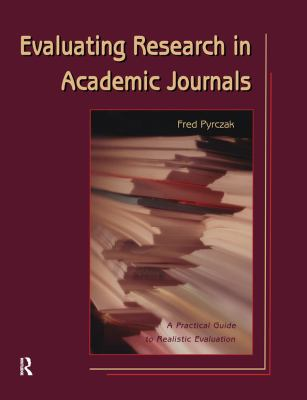
Evaluating research in academic journals : a practical guide to realistic evaluation
Pyrczak, Fred., 1999
This guide provides students and novice researchers with a clear, practical framework for critically assessing published research across the social and behavioral sciences. Pyrczak demystifies research components—problem statements, methodology, data analysis, and interpretation—while emphasizing common pitfalls and realistic standards of evaluation. The book equips readers to become informed, discerning consumers of scholarly literature and supports the development of strong analytical and academic writing skills.
Digital humanities : knowledge and critique in a digital age
Berry, David M.; Fagerjord, Anders, 2017
In a world of Big Data, Google Books, digital archives, real-time streaming systems and smart phones, our use of culture has been changing dramatically. The digital humanities give us powerful tools and methods for thinking about culture and history in the contemporary world, through the use of sophisticated computing techniques and methods. Berry and Fagerjord provide a comprehensive guide, exploring the history, intellectual work, key arguments and ideas of this emerging discipline. They also undertake a substantive critique, suggesting ways in which the humanities can be enriched through computing, but also how cultural critique can transform the digital humanities.
Culture, curiosity, and communication in scientific discovery : the eye in ideas
Sanitt, Nigel, 2019
Sanitt explores the cultural, philosophical, and communicative forces that shape how scientific ideas emerge and evolve. Blending insights from physics, cognitive science, and the humanities, he examines the role of curiosity, metaphor, and narrative in scientific thought. The book highlights how scientists interpret the world, exchange ideas, and construct meaning, offering a reflective account of discovery as both an intellectual and cultural process.
Qualitative data : an introduction to coding and analysis
Auerbach, Carl F.; Silverstein, Louise B., 2003
Qualitative Data is meant for the novice researcher who needs guidance on what specifically to do when faced with a sea of information. It takes readers through the qualitative research process, beginning with an examination of the basic philosophy of qualitative research, and ending with planning and carrying out a qualitative research study. It provides an explicit, step-by-step procedure that will take the researcher from the raw text of interview data through data analysis and theory construction to the creation of a publishable work.
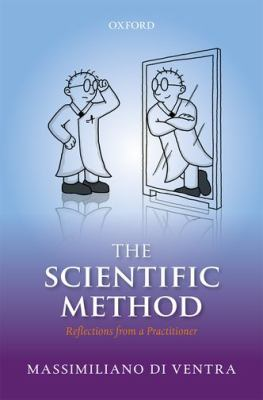
The scientific method : reflections from a practitioner
Di Ventra, Massimiliano author.
An examination of the scientific method, the foundation of science and basis on which our scientific knowledge is built. It includes discussions on objective reality, hypotheses and theory, and the fundamental and unalienable role of experimental evidence in scientific knowledge. Di Ventra also examines the limits of science and the errors we make when abusing its method in nonscientific contexts. By reflecting on the general method, the reader can critically sort through other types of scientific claims, and judge their ability to apply it in study and in practice
Research exposed : how empirical social science gets done in the digital age
Hargittai, Eszter, 2021
Eszter Hargittai and her team of experienced researchers offer detailed behind-the-scenes accounts of conducting empirical social science research in the digital age. It brings vivid first-hand accounts of innovative research projects and introduces readers to a wide range of digital age methods, including data scraping, surveys, in-person observations, and on-line content analysis. The goal of the book is provide insight for those who want to do their own digital research about how mistakes can be made and avoided
Find it fast : extracting expert information from social networks, big data, tweets, and more
Berkman, Robert I., 2015
How to search the internet to locate the best information sources, how to find and utilize the professionals behind those sources, and how to combine these techniques to complete an information search on any subject. This fully updated 6th edition includes how to search beyond Google, leveraging big data in the search process, and how to search the social web. Readers will also find expert advice on how to know if a site is a trusted source; understanding how and why sources differ; using precision search strategies and taming information overload; and finding, evaluating, and identifying experts. Whether it’s consumer advice, information for a job or project, facts for starting a new business, or answers to questions on obscure topics, Find It Fast is the perfect resource for learning to hone one’s internet searching skills.
Harnessing the power of Google : what every researcher should know
Brown, Christopher C., 2017
Offers simple strategies that streamline research and improve anyone’s search results. It will specifically benefit information professionals, students, and academic researchers in disciplines like international studies, political science, and statistical research. Illustrated with helpful screen shots, this handbook will be an often-consulted desk reference and can serve as a workshop guide or supplementary reading in courses on online research skills.
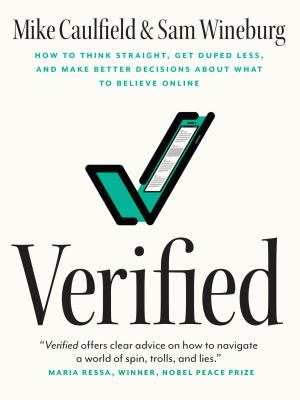
Caulfield, Mike; Wineburg, Samuel S., 2023
These days, the world wide web has become the Wild West. We are faced with a seemingly endless source of information, all of it difficult to evaluate. Historian Sam Wineburg and media literacy guru Mike Caulfield are here to help with this informative, approachable guide to navigating the internet. With this illustrated tool kit, readers will learn to identify red flags, get quick context, and make better use of common tools like Google and Wikipedia that have the ability to help and hinder in equal measure
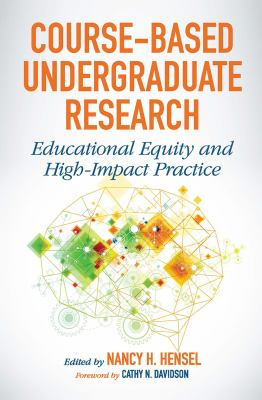
Course-based undergraduate research : educational equity and high-impact practice
Hensel, Nancy H.; Davidson, Cathy N., 2018
This book explores the concept and implementation of course-based undergraduate research experiences (CUREs) as a high-impact educational practice aimed at promoting equity and inclusion in higher education. Edited by Nancy H. Hensel, with an introduction by Cathy N. Davidson, it provides practical strategies, case studies, and theoretical frameworks for integrating research into the curriculum across disciplines. The volume emphasizes how CUREs can enhance student engagement, foster critical thinking, and expand access to research opportunities for diverse student populations.
Beyond the archives : research as a lived process
Kirsch, Gesa.; Rohan, Liz, 2008
This collection of highly readable essays reveals that research is not restricted to library archives. When researchers pursue information and perspectives from sources beyond the archives from existing people and places they are often rewarded with unexpected discoveries that enrich their research and their lives.
Researching writing : an introduction to research methods
Kinkead, Joyce A., 2016
An accessible, informative textbook that teaches undergraduates how to conduct ethical, authentic research in writing studies. The book introduces students to the research approaches used most often, and offers a course framework for professors creating or teaching research courses themselves.
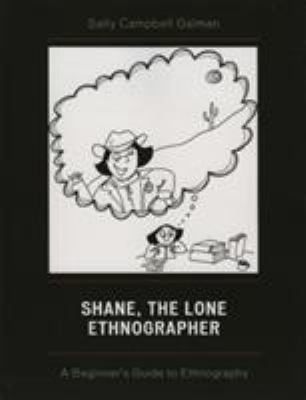
Shane, the lone ethnographer : a beginner’s guide to ethnography
Galman, Sally Campbell, 2007
Shane, The Lone Ethnographer is an accessible and entertaining introduction to ethnography. Campbell Galman walks the reader through the process of doing ethnographic research, via her comic character Shane, the Lone Ethnographer, on the campus of an unnamed university. For the novice researcher about to embark on fieldwork in qualitative research methods, this is an excellent, and the only comic-book,introduction. Her text will delight and inform students who are learning ethnographic methods in anthropology, education, and other social science courses.
On being a scientist : a guide to responsible conduct in research
Committee on Science, Engineering, and Public Policy (U.S.); National Academy of Sciences (U.S.); National Academy of Engineering.; Institute of Medicine (U.S.), 2009
The scientific research enterprise is built on a foundation of trust. Scientists trust that the results reported by others are valid. Society trusts that the results of research reflect an honest attempt by scientists to describe the world accurately and without bias. But this trust will endure only if the scientific community devotes itself to exemplifying and transmitting the values associated with ethical scientific conduct. On Being a Scientist was designed to supplement the informal lessons in ethics provided by research supervisors and mentors. The book describes the ethical foundations of scientific practices and some of the personal and professional issues that researchers encounter in their work.
Qualitative research : good decision making through understanding people, cultures and markets
Keegan, Sheila, 2009
Qualitative research is a powerful tool which plays a part in conducting marketing research into customer value analysis, branding and naming, new product launch, customer satisfaction and market segmentation, among other marketing areas. Its techniques include all types of focus groups, in depth one-one-one interviews, intercept studies and observational research.