
Children’s Picture Book Collection
Browse this collection to read and understand literature for young children
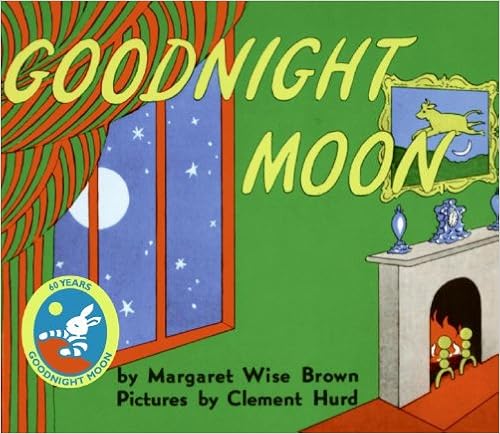
Browse a variety of children’s picture books.
Organized by the first letter of the author’s last name.
Or research more about children’s picture books from our databases.
Print Magazines
Read the latest magazines in print.

Exchange Magazine: A bimonthly publication focused on the administration of programs for young children.
Rethinking Schools: “Crammed with innovative teaching ideas, valuable resources, and analyses of important issues and organizing, Rethinking Schools is a source for educators who want to enlist students in thinking deeply and critically about the world today.”
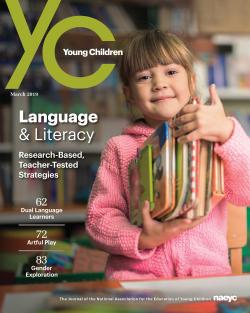
Young Children: Peer-reviewed professional journal, issues are organized around topics important to the early childhood education field.
Browse the Stacks
LA History of education
LB Theory and practice of education
LC Special aspects of education
- Kids Count Data Center Data on child and family well being in the U.S. collected by the Annie E. Casey Foundation.
- Head Start Data & Research Head Start fact sheets, research reports, and statistics.
- U.S. Census Bureau – School Enrollment Annual data on school enrollment, including pre-kindergarten, from the Current Population Survey.
- National Household Educational Surveys Surveys include Parent and Family Involvement in Education, Early Childhood Program Participation, and School Readiness.
- Early Childhood Longitudinal Studies Three longitudinal studies that examine child development, school readiness, and early school experiences.
- Digest of Education Statistics Annual compilation of statistics on American education from pre-kindergarten through graduate school.
- Condition of Education Annual report on trends and developments in education based on latest statistical data. Includes participation in pre-primary education.
Longitudinal Studies
Longitudinal studies are used to study changes in individual or group behavior over an extended period of time by repeatedly monitoring the same subjects. In longitudinal research, results are recorded for the same group of subjects, referred to as a cohort, throughout the course of the study. The longitudinal study is an important research method in developmental psychology.
One major strength of longitudinal designs is that researchers are able to follow the same subjects over the entire period of a study. A longitudinal study that began in the 1960s, the Perry Preschool Project, assessed the children in the study at ages 4, 7, 10, and 12 and then again over a range of time as adults, providing researchers with strong statistical power in analyzing these changes.
Time, however can be a disadvantage of the longitudinal study because of the need of researchers to be involved in a study over a number of years. There’s always a risk of losing some of the research subjects for any number of reasons. This means conclusions can only be made on the subset of the cohort who continued in the study.
There can also be unexpected complications that can arise during the course of a longitudinal study that can require changes to the study. For example, a longitudinal study of communication that began in the 1980s would have to change its questions to include communicating via cell phones, email, and texting technologies.
Longitudinal studies remain an important research strategy, although they are not frequently undertaken because of the time and expense involved.
Example: Perry Preschool Project, Ypisilanti, MI
- Identified a sample of 123 low-income African-American children who were assessed to be at high risk of school failure
- 58 children were randomly assigned o a program group that received a high-quality preschool program at ages 3 and 4
- 65 children received no preschool program prior to attending kindergarten
- project staff collected data annually on both groups from ages 3 through 11 and again at ages 14, 15, 19, 27, and 40,
- after each period of data collection, staff analyzed the information and wrote a comprehensive official report.
The Perry Preschool Project allowed researchers to study the children as they matured and to record their developmental patterns throughout childhood into adulthood. They concluded that, because of the random assignment strategy, the preschool experience remains the best explanation for the difference in the performance of the two groups of children over the years.
Cross-Sectional Studies
A cross-sectional study is a method of observational research. Data is collected at one given point in time across a sample population or a pre-defined subset. Data is able to be collected easily and much more quickly, than a longitudinal study.
Because cross-sectional designs only capture a snapshot in time, with no follow-up research, it’s impossible to get information on how a situation develops over time. In addition, due to the many differences of the participants – age, education, culture, etc. – cross-sectional studies may not accurately capture the true nature of causes of a problem being studied.
A simple survey is one of the most common tools used to gather data in a cross-sectional study. It can be collected relatively quickly and cheaply depending on the questionnaire. In the study below, researchers looked the management approaches of three different groups of early childhood professionals – preschool teachers, public health nurses, and speech-language pathologists, all of whom work with children who stutter.
Example: Early Childhood Professionals’ Management of Young Children Who Stutter
Purpose
Early childhood professionals must accurately identify, refer, and treat children who stutter (CWS) within the scope of their respective roles to ensure each child receives the best possible care. What is the best way to achieve this goal?
Method – Survey
- conducted in Norway
- sample of 342 early childhood professionals
- 126 preschool teachers,
- 95 public health nurses, and
- 121 Speech Language Patholgoists (SLP)
- survey asked questions about the approaches professionals took with parents
- “wait and see”
- assessment of child
- additional appointments with parent and child
- referral to SLP
- counseling
- discuss with colleagues
- participants (ECE professionals) completed an online survey
- methods used to analyze the results of the survey
- descriptive statistics, ordinal regression, and chi-square analyses
Conclusions of the Survey
recommendation for the development guidelines and interdisciplinary seminars to establish a better approach to improve management practices and ensure young CWS receive the best possible care
that management practices (approaches taken with parents) varied among the three professions
the different approaches reflected the differences in the roles and competencies among the three professions
all of the three profession needs more information and support to work effectively with children who stutter
Case Studies
A case study is an in-depth analysis of a unit — such as a person, group, organization, institution, community, or culture— usually over an extended time period. Research methods may involve extensive interviews with major participants or direct observations of how an organization operates, as well as how its members interact. The case study does not rely on laboratory experiments or survey data. Its focus is on events as they occur naturally and on existing relationships.
Case studies are used extensively across a range of social sciences such as sociology, political science, psychology, history, economics, planning, administration, public policy, education and management studies. A case refers to an individual, several individuals (as in multiple-case study), an organization or institution, or a culture. Researchers tend to use multiple sources of evidence, including archival records, interviews, direct observation, participant-observation, and/or physical artifacts. Most case study findings are written, but some appear as films, videos or audiotapes.
It’s important to decide beforehand what criteria exists for judging the success of a case. Each person is unique and may react or interact differently than other members of the group. Criticism of case studies comes from those who claim that case studies lack objectivity, that findings cannot be generalized, or that sample sizes are too small. However it’s been proven, with surveys, for example, that it is possible to draw reasonable conclusions from generalized findings.
All research methods depend upon the skill of the researcher, the context of the research, and the subject of analysis. In spite of various criticisms, case studies continue to provide some of the most interesting and inspiring research in the social sciences.
NOTE: Swiss psychologist Jean Piaget (1896-1980) was a leader in the case study method. In 1921, he published his findings from his systematic observations of how children learn. During his life, Piaget continued to develop his theory that a child’s mind evolves as it passes through a series of set stages to adulthood.
Example: Case Study: Becoming Trauma-Informed
A Case Study of Early Educator Professional Development and Organizational Change
This case study investigated how a specific model, called the Breakthrough Series Collaborative designed as a model of professional learning helped five urban ECE programs adopt new trauma-informed practices in classrooms and the organization as a whole.
The case study explored the changes that occurred at the individual, classroom, and organizational levels
Results of the case study suggested changes occurred
- in knowledge and attitudes about trauma, empathy, and teacher empowerment
- toward including social and emotional teaching and family centered communication at the classroom level
- at the organizational level to provide a more caring and collaborative workplace culture and improved interagency collaboration
- in professional development delivered at the organizational level may support the coordinated implementation of new practices by both teachers and administrators
This guide is adapted from the “Early Childhood Education: Research Basics: Research Methods” created by Western Technical College. It is licensed under a Creative Commons Attribution 4.0 International License.
The Center for Early Childhood Education Extensive archive of footage featuring young children, early childhood professionals engaged in teaching and interviews with experts in the field. From the Eastern Connecticut State University.
The Encyclopedia on Early Childhood Development Up-to-date scientific knowledge available on the development of young children, from conception to age five. Produced by the Centre of Excellence for Early Childhood Development (CEECD) and the Strategic Knowledge Cluster on Early Child Development (SKC-ECD).
ERIC: Education Resources Information Center
Bibliographic records of education literature, plus a growing collection of full text journal articles, an alphabetical list of non-journal sources and RSS feeds and quick searches of featured publication sources and high-interest topics.
Education World A resource that includes original content, including lesson plans, practical information for educators, information on how to integrate technology in the classroom, articles written by education experts, and employment listings.
NAEYC: National Association for the Education of Young Children Promotes high-quality early learning for all young children, birth through age 8, by connecting early childhood practice, policy, and research.
NIEER: National Institute for Early Education Research Conducts academic research to inform policy supporting high-quality, early education for all young children.
Recommended Blogs
Teaching with the Library of Congress: Discover and discuss the most effective techniques for using LOC primary sources in the classroom. Teaching strategies, outstanding primary sources, lesson plans, teacher resources, and current thinking on effective classroom practice are all open for discussion.
